

| Overview |
| Message from the President |
| Contact |
| Map of Campus |


I. Overview
The school of port and shipping management (“Port and Shipping School" for short) of Guangzhou maritime university has been running for 27 years. It is focus on talents training and scientific research of the transportation and logistics industry, especially waterway transport and port and shipping logistics. It is the school's characteristic backbone school.
The school has six teaching and research institutions, including department of transportation, department of logistics engineering, department of transportation management, department of logistics management, port and shipping industry development research studio and port and shipping school experiment center. There are four undergraduate programs in transportation, logistics engineering, traffic management and logistics management. The transportation engineering discipline has been established as a key discipline and characteristic advantage discipline in Guangdong Province. The logistics engineering and management discipline has been approved to jointly cultivate a master's degree in logistics engineering with Guangdong University of Technology; the transportation major is a Guangdong Province demonstration major and a provincial-level first-class major in 2020 Construction sites; logistics engineering majors are college-level key majors and provincial key majors; at the same time, two provincial-level quality resource sharing courses and one provincial-level ideological and political demonstration course will be built.
The school has 56 faculty members, including 49 full-time teachers, including 4 teachers with senior professional titles, 18 associate professors, and 16 doctoral teachers; 21 dual-professional teachers, more than 40% of teachers with senior professional titles, more than 90% with postgraduate or master's degree; more than 40% are dual teachers Type teachers.
There are 7 seven laboratories in the school, established 13 well-functioning off-campus practice teaching bases, and signed strategic cooperation agreements with Guangzhou Port and Shipping Development Research Center and Pearl River Water Transport Magazine. Meet the needs of industry-university-research cooperative education.
The school emphasizes applied research and social services. Many government suggestions were adopted, among which, "About improving the support for the development of the shipping industry as soon as possible" The “Supported Recommendations” was adopted by the Central Committee of the Democratic League and submitted to the State Council, and was personally approved by the central leadership, which had a good social impact.
II. Undergraduate Programs
1. Transportation (professional code: 081801)
It is one of college-updated majors in our university in 2013. It has a history of 8 years. On June 8, 2018, the Department of Education of Guangdong Province announced that the Department of Transportation passed the acceptance check of the "Guangdong Province Applied Undergraduate Demonstration Program" development project. In February 2021, the Ministry of Education announced that the Department of Transportation was awarded the honor of 2020 provincial first-class undergraduate professional development project.
The transportation major aims to cultivate all-round development of morality, intelligence, physique, beauty and labor in students. This program helps students to obtain basic theories of transportation, basic engineering and management disciplines. Students can lean knowledge about computer, English, humanities and social sciences. The program also helps student to master transportation, basic knowledge and skill of engineering technology such as equipment and transportation, transportation planning, transportation organization and management, port management. This program aims to enable the student to obtain international perspective, and be able to work in transportation-related fields, especially port and shipping departments, are engaged in transportation planning and design, vehicle utilization and management, transportation management, business operations, dispatching and law enforcement. This program aims to help students to engage in related scientific research work in transportation engineering and management after graduation.
2. Logistics Engineering (professional code: 120602)
It is a traditional program with 8-year history, which became specialty construction of Guangdong Province in 2020. The program is designed for the transformation of the logistics industry under the new economy, especially around port transportation. It aims to provide students with the use of information technology and managerial approaches in improving sea transportation, port management, vehicle system design, and optimization modeling, etc. so as to create value for the customers.
Graduates mainly serve in international logistics enterprises and institutions related to shipping ports, logistics departments of Groups, logistics research and teaching departments, government agencies, and are engaged in the planning and implementation of project logistics and engineering logistics; ship scheduling, container handling, land transportation, etc.
3. Transportation Management (professional code: 120407T):
It began enrollment in Sep. 2016. We focus on cultivating students to be applied senior professionals, who are with morality, intelligence, sports, beauty and labor in all-round development, capable of good scientific and cultural literacy and high degree of social responsibility, good at English and computer application, master basic theoretical knowledge in economics, management, public management, transportation engineering, familiar with the frontier issues of industry development, have the capabilities of operation and management in transportation, commerce and enterprises and organization abilities of passenger and cargo transportation, can engage in comprehensive traffic administrative law enforcement management, production and operation management of transportation enterprises, and port and navigation management in the field of transportation management, especially in the field of international shipping.
4. Logistics Management (professional code: 120601)
This major has 7 professional characteristic laboratories such as the port logistics 3D simulation laboratory and the port logistics digital laboratory. In cooperation with Guangzhou Port Co., Ltd., Hyde International Logistics and other enterprises, it has established 13 well-functioning off-campus practice teaching bases, to construct a practical teaching mode that combines in-class practice and concentrated practice to strengthen the cultivation of students' practical ability.
The logistics management profession highlights the characteristics of the port and shipping industry, and insists on serving Guangdong on the transportation and logistics fields. Cultivate logistics management professionals who have basic knowledge of logistics system management, understand logistics practical operations and management-related businesses, pay attention to the edge issues of logistics industry development, and serve the shipping industry and local economic development.
III. Faculty
The school has 56 faculty members, including 49 full-time teachers and 7 administrative staff.
1. School’s Leadership:
Secretary of the Party Committee: Wanchun, Su
Dean: Chunfeng, Ge
Assistant Dean: Wei Jiang; Weihua Liu
Deputy Party Secretary: Aiguo Zeng
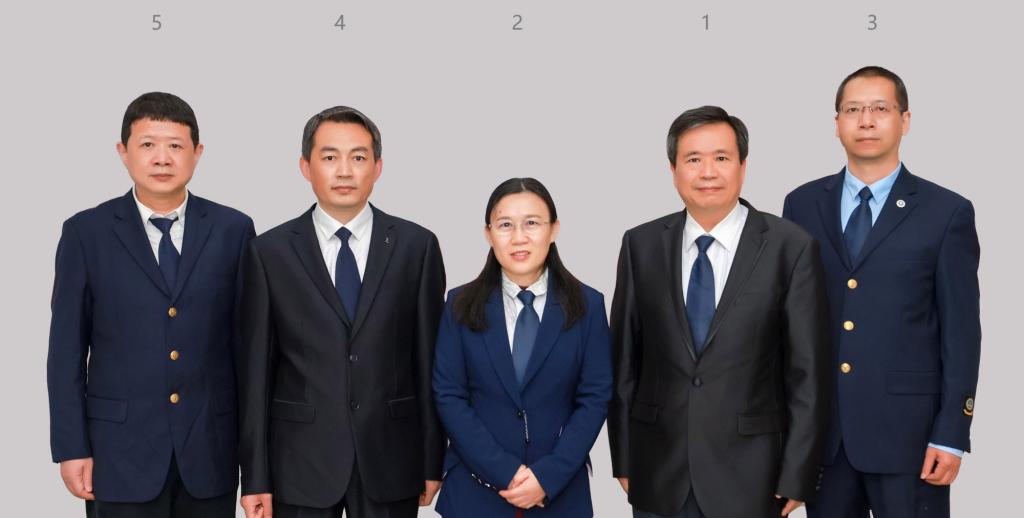
Figure 1 School’s Leadership
1 Wanchun Su, master, professor, secretary of the Party Committee of the School of Port and Shipping Management. Mainly engaged in the teaching and research of management science and engineering, corporate management, strategic management, human resource management, cultural management, industrial economy, etc.; presided over and participated in 6 provincial and ministerial-level projects, published more than 30 academic papers, including more than 10 core journals, one article was included by EI and two articles were included by CSSCI. An expert on the evaluation committee of senior professional and technical qualifications for college teachers in Guangdong Province, an interviewer for public recruitment of public institutions in Guangdong Province, and an expert on the comprehensive bid evaluation expert database in Guangdong Province.
2 Chunfeng Ge, Master, Professor, Dean of the school of port and shipping management, member of the provincial CPPCC, advanced individual of provincial teachers' ethics and famous teacher at the school level. She has been engaged in the teaching and research of shipping economy and finance for a long time; She also serves as a member of the Education Guidance Committee of Finance Specialty in Guangdong Province and vice president of Guangdong Institute of systems engineering; She has presided over a number of provincial projects, published 35 papers, and received 1 written instruction from the central leadership.
3 Wei Jiang, Master, Professor, Assistant Dean of the school of port and shipping management. His professional direction is international shipping management and the international logistics. He has rich management, teaching and scientific research experience above 20 years, as two textbooks’ editor in chief, published over 20 papers. He presided over 1 Educational Science Project in Guangdong Province and participated in 6 projects, including the Communications Department of Guangdong Province and Guangdong Marine Bureau.
4 Weihua Liu, Ph.D., Assistant Professor, Assistant Dean of the school of port and shipping management. He lectures on "Supply Chain Management", "Statistics" and "Production and Operation Management" courses. He has been engaged in logistics and supply chain management research for a long time and presided over 1 Guangdong Provincial Philosophy and Social Science Fund, participated in 1 National Social Science Fund, and 2 Funds from the Ministry of Education; published monographs "Warehouse and Distribution Management (Fourth Edition)" and "Supply Chain Management"; published 2 EI papers, 8 core journal papers; won the first prize of teaching and research papers of the logistics management and engineering professional teaching and research committee of Guangdong province undergraduate colleges and universities. Instructed students to win multiple awards in the first National Supply Chain Competition, Guangdong University Bioflow Design Competition and other competitions.
5 Aiguo Zeng, Double bachelor, lecturer, Deputy Party Secretary. He graduated from Department of Navigation, Dalian Maritime University and theory Department, Sun Yat-sen University. He has been awarded outstanding Educator and Outstanding Party affairs worker for many times, engaged in student management for a long time and good at career planning guidance, employment guidance and psychological counseling.
2. Department of Transportation
There are 20 full-time teachers, including 8 doctors, 8 senior title teachers and 6 double-qualified teachers; 3 off-campus part-time teachers.
Jun Cheng, Ph.D. associate professor, head of Department of transportation and professional director. Research interests: transportation planning and management, management decision-making and system theory. Major a number of provincial projects and published more than 30 papers.
Sumei Yang, master, associate professor, member of China Zhigong party, associate professor of port and shipping management school of Guangzhou Maritime University, master of economics of Wuhan University. Member of China Private Economy Research Association, deputy director of the Economic Committee of Guangdong Provincial Committee of China ZhiGong party, member of the 13th Guangzhou Municipal Committee and director of the economic and Social Committee, member of the 14th standing committee, chairman of the general branch of Guangzhou Maritime University, and supervisor of the 8th and 9th Guangzhou special education. Mainly engaged in economics teaching and scientific research.
Peng Liu, Ph.D., associate professor, member of the democratic revolution; External experts employed by the Counselor's office of Guangdong provincial government; Research interests: transportation system organization and optimization, transportation planning, etc. He graduated from Tongji University majoring in transportation planning and management. In recent years, he has presided over or participated in several projects above the provincial level; Participated in a number of consulting projects of the Counselor's office of Guangdong provincial government; Published 1 monograph; He has published more than 30 academic papers included in EI.
Guangbin Lu, master, associate professor. He has been engaged in teaching in Guangzhou Maritime University for 27 years. He mainly undertakes the teaching of "container transportation and multimodal transport", "foundation of entrepreneurship", "ERP of freight enterprises" and other courses.
Zhanxiu Sun, Ph.D., lecturer, engaged in research on economic development and transportation, undertook the teaching of international maritime geography, intelligent transportation technology, traffic planning, traffic management and control, won the third prize in the youth lecture competition, published several papers in domestic core journals, and participated in a number of topics.
Botang Li, Ph.D., presided over or participated in 6 projects, including 1 Educational Science Project in Guangdong Province, 1 project supported by the National Natural Science Foundation of China, 2 horizontal projects and 1 graduate innovation project; Nearly 20 core scientific research papers have been published, of which 6 have been collected by SCI or EI.
Siqi Hao, Ph.D., Presided over 1 youth project of NSFC, published more than 10 academic papers in TRC and other authoritative journals in the field of transportation, and authorized 2 national invention patents; Main research interests: air traffic safety, new generation air traffic management theory.
Zhu Ma, Ph.D., lecturer, engaged in teaching and scientific research related to economy and finance.
3. Department of Traffic Management
There are 10 full-time teachers, including 1 doctor, 6 senior title teachers and 6 double-qualified teachers; 2 off-campus part-time teachers and 1 university-level famous teacher, 1 university-level research personnel fostered in the “Thousand,Hundred,and Ten” Project of Guangdong Province.
Weijun Huang, master, associate professor, the subject leader of Traffic Management (international shipping) in Guangzhou Maritime University. He has been engaged in the teaching and practice of international shipping and logistics for 30 years, teaching "container transportation and multimodal transportation", "ocean shipping business” and other courses. Familiar with shipping business, FWD business, as well as the operation of Terminal loading and Discharge, customs declaration. He edited the national planning undergraduate textbook "International Container Maritime and Freight Forwarding"; published 8 academic papers; presided over eight projects, such as "Study on container Port Construction Fee Collection Norms" of Shenzhen Maritime Safety Bureau of Ministry of Transport.
Xiaochen Jin, Ph.D., head of traffic management department, associate professor. Her main research fields are finance, international trade and regional economy. Mainly responsible for the teaching of international trade related courses. She has published more than ten academic papers, presided over and participated in a number of scientific research projects.
Qing Zhou, master, associate professor. Her research interests are in the areas of Human Resources Management and Business Management. She has published many research papers, conducted several research projects. She published Human Resources Management and Development textbook served as lead editor and Business Logistics textbook served as sub-editor.
Zhenlin Luo, master, associate professor. His professional direction is the transportation planning and management and the port logistics. He is an expert in the bidding evaluation of water transportation engineering in the transportation system in Guangdong Province. He mainly lectures on such courses as the loading and unloading technology and the port enterprise management, etc. Besides, he is engaged in the research of the transportation planning and management, and he has already published more than ten articles on the field of the transportation and management and the port logistics.
Lifang Zhang, master, associate professor, research direction in international trade practice and foreign trade documents. The main teaching courses are "International trade practice", "International trade training and Document experiment".
Nijia Wen, master, associate professor. She has been engaged in professional English teaching and comprehensive business training in international shipping for many years. She had ever taken charge of the construction of the lab project invested jointly by central and local governments, won the first prize of National Transportation Vocational Education for the textbook edited, Customs Declaration and Inspection Practice, visited San Giorgio Navigation Institute, Genoa, Italy; and guided students to participate in the provincial Challenge Cup competition and won the 3rd prize. She is also awarded the honorary title of university-level "Famous Teacher", and fostered as the "Thousand, Hundred, and Ten Project" school-level researcher.
4. Department of Logistics Engineering
There are 11 full-time teachers, including 6 doctor, 4 senior title teachers and 7 double-qualified teachers; 2 off-campus part-time teachers.
Rong Liu, Ph.D., Associate Professor, Visiting Scholar at California State University. She is the head of Department of Industrial Logistics. She had been engaged in research and teaching in Logistics System Optimization and Decision-Making. She is majoring in Logistics System Engineering, Operations Research, Statistics, Production and operation management, especially "Operational Research" is recognized as a demonstration project of ideological and political reform of undergraduate courses in Guangdong Province in 2021. She has published over 20 journal papers and participated in research project.
HaiYing Zhou, Ph.D., Associate Professor. She is director of laboratory in our department. She is mainly engaged in Game Theory and its application in management, Logistics Engineering, Smart Port and other related research or teaching. She has published 32 journal papers and participated in over 10 research projects.
Jing Chen, Master, Associate Professor. She is the program leader of Logistics Engineering. She is majoring in Transportation, Machinery in Port, Economics, Vehicle Organization. She participated in teaching research projects and writing 4 textbooks.
XianQuan Tang,Ph.D.. He was experienced teacher in Department of Logistics Engineering. He used to participate in teaching method research and writing textbook about operations research. He has published 3 journal papers in recent year. He received “Best Teacher” award one time.
Jian Cao, Ph.D., Major in Project Management for Transportation and Logistics, Smart Transportation and Logistics.
Jing Song, Ph.D., She had rich working experience in large company such as Media Group, Antong Logistics, as well as visiting scholarship cooperated with South China University of Technology and California State University. In recent years, she has published over 10 journal papers and participated in research project.
Yan Zhou, Master, Associate Professor. She had 7 year working experience in logistics industry, and obtained relevant professional certificate. She also active in research. She had published over 10 journal papers and participated in 4 projects. On the other hand, she conducted students and wined awards in competition about logistics modeling.
5. Department of Logistics Management
There are 8 full-time teachers, including 2 doctor, 3 senior title teachers and 2 double-qualified teachers; 3 off-campus part-time teachers and 1 university-level research personnel fostered in the "Thousand,Hundred,and Ten" Project of Guangzhou maritime university.
Haiou Xiong, Ph.D., associate professor, a visiting scholar at California State University, and the current director of the Logistics Management Department of the College of Port and Shipping Management. Research direction: system optimization, system decision-making, successively published more than 20 scientific research papers in national journals such as "Practice and Understanding of Mathematics", "Fuzzy Systems and Mathematics", participated in a number of National Natural Science Foundation of China, National Social Science Foundation, and hosted The Guangdong Provincial Science and Technology Plan Project, the Guangdong Provincial Department of Education Project, and the University Innovation and Strong University Project. Now he mainly teaches courses logistics system engineering, logistics system planning and design, operations research, logistics system simulation, etc.
Qiang Li, Ph.D., lecturer. Has long been engaged in the research of innovation management and the teaching of logistics cost management, international maritime geography, logistics economic geography and logistics enterprise management; presided over the provincial "Research on the impact of industry-university cooperation on the teaching performance of universities in Guangdong based on the perspective of channel combination" project; 6 academic papers published, including 3 domestic core journal papers.
Yongjun Hu, master, associate professor. The research direction is logistics enterprise management, logistics marketing, etc., published more than ten papers, participated in several school-level projects, and presided over a provincial-level innovation project. The main courses she currently teaches including marketing, management principles, e-commerce experiments and entrepreneurial foundation courses.
IV. Laboratories and Other Facilities
1. Port Handling Technology Laboratory
Port loading and unloading technology laboratory mainly includes three parts: (1) Port handling tool model, mechanical model, ship model. (2) Simulation model of port container wireless real-time loading and unloading operation control: according to the actual needs of the port container terminal, simulate and design the terminal container yard monitoring and wireless operation system, and establish an efficient and optimized operation model. (3) Automatic container terminal intelligent management and simulation optimization platform software; Fleet planning and route allocation decision support system software.
The laboratory covers an area of about 180 square meters with a total investment of about 1.96 million yuan. The laboratory has port handling technology training platform, port equipment model, port handling tool model, simulation optimization platform software, route ship allocation decision-making system software, server, display stand and other supporting equipment. It Provides experimental training teaching of port machinery and logistics machinery equipment for transportation, logistics engineering, traffic management and other majors. At the same time, it also provides a platform for teachers and students to carry out port scheduling optimization simulation, route ship allocation and fleet planning decision-making research, innovative experiments and research on container port production organization and safety management.
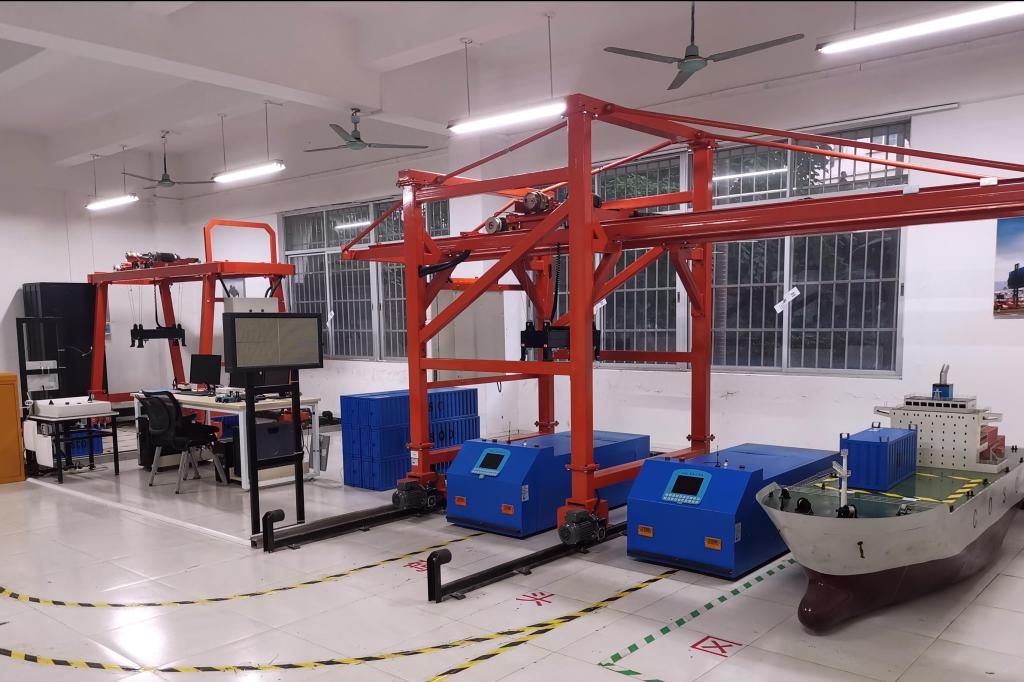
Figure 2 Laboratory’s Interior
2. Intelligent Transportation and Shipping Trading Platform Laboratory
The laboratory includes two parts: urban traffic simulation experiment sand table and shipping transaction big data processing platform. The laboratory covers an area of 175 square meters with an investment of 1.1 million yuan, and has urban traffic simulation experiment sand table, intelligent traffic signal coordination and control experimental system, on-line simulation system of traffic diversion scheme, hand-held multifunctional survey instrument for transportation, shipping transaction teaching system management, shipping transaction big data processing platform, transaction information portal, tablet computer, server, projector, electronic whiteboard and other equipment. It Provides intelligent transportation technology experiment and training teaching for transportation, traffic management and other majors. At the same time, it also provides a platform for teachers and students to carry out intelligent transportation innovation experiments and research. The intelligent transportation technology experiment and training teaching for transportation, traffic management are also provided in this laboratory.
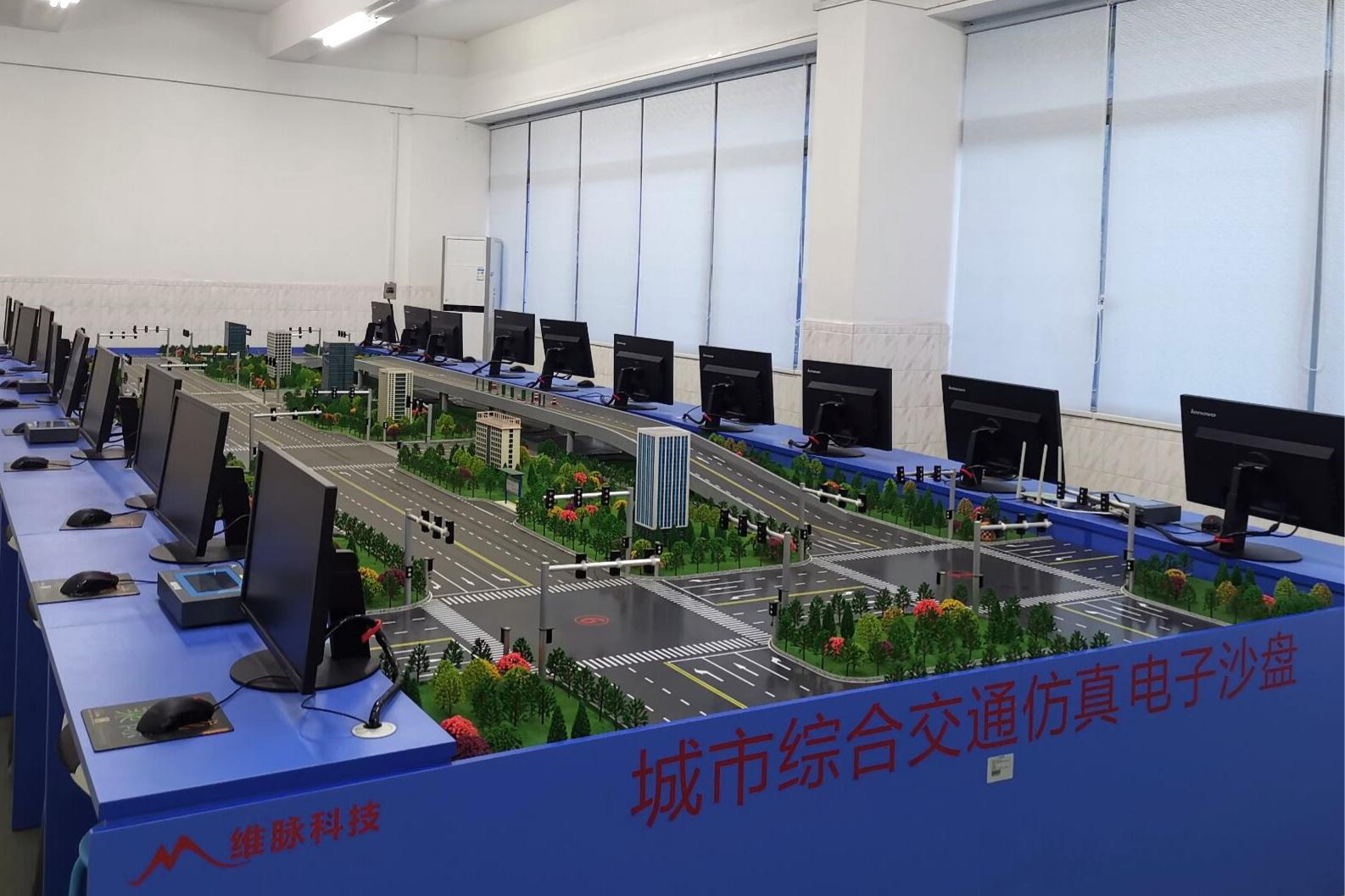
Figure 3 Laboratory’s Interior
3. Port Logistics Digital Laboratory
The Port logistics digital laboratory is mainly composed of intelligent CFS laboratory, Internet of things application laboratory, warehouse management and operation laboratory. It has Internet of things information management composed of more than 40 computer terminal displays and sensors, shelves, forklifts, containers, conveyor belts and other equipment. It can carry out practical teaching projects such as logistics mechanical equipment experiment, networking and operation experiment of Internet of things and logistics information system experiment, and provide a platform for innovative experiments and research such as container application, informatization, Internet of things, intelligent storage design and cargo module design.
4. Port logistics 3D Simulation Laboratory
The Port logistics 3D Simulation Laboratory includes 86 computers, 1 set of three-dimensional projection workstation, 4 sets of three-dimensional display mode LCD projectors, 3 sets of projection screens and support frames, and 1 set of edge fusion surface correction system. It mainly serves the practical teaching of logistics engineering, logistics management, transportation, traffic management and other majors, and carries out innovative experiments and Research on port logistics optimization for teachers and students.
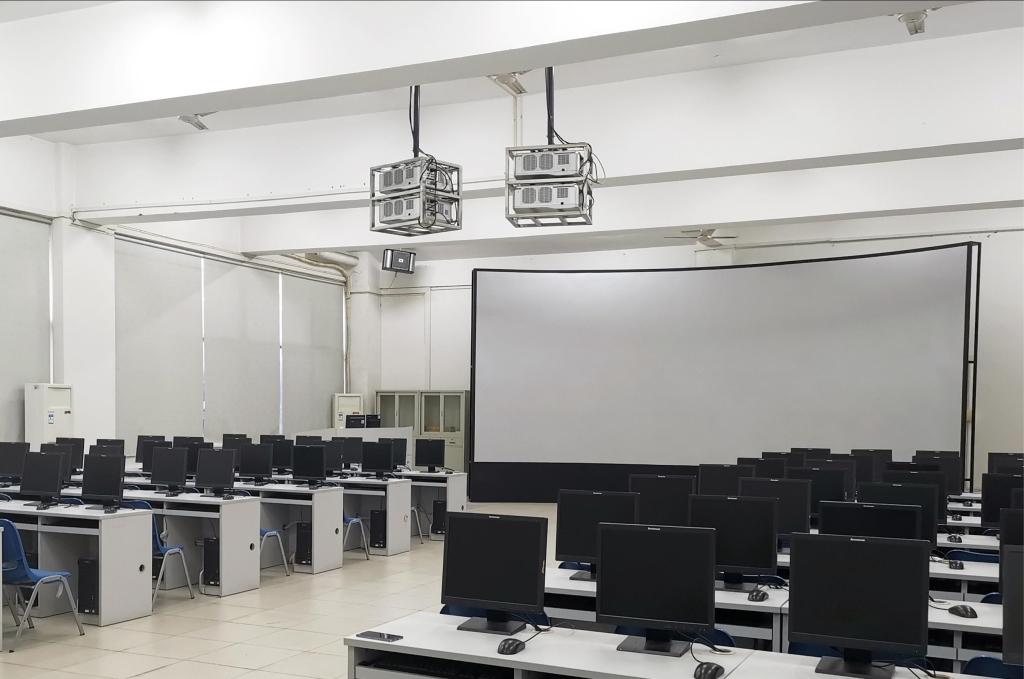
Figure 4 Laboratory’s Interior
5. Shipping Business Simulation Laboratory
The Shipping business simulation laboratory includes 86 computers, 1 server, 1 set of video booth, as well as hardware equipment such as switch, DVD and tape recorder. One set of international trade simulation training software and one set of LINGJI digital voice system are installed. Based on the conditions of hardware and software, the shipping business simulation experiment training room can form a professional teaching environment with integrated functions such as multimedia classroom, network classroom and examination center, and provide a platform for practical teaching and shipping business organization optimization innovation experiment and research for logistics management, transportation, traffic management and other majors.
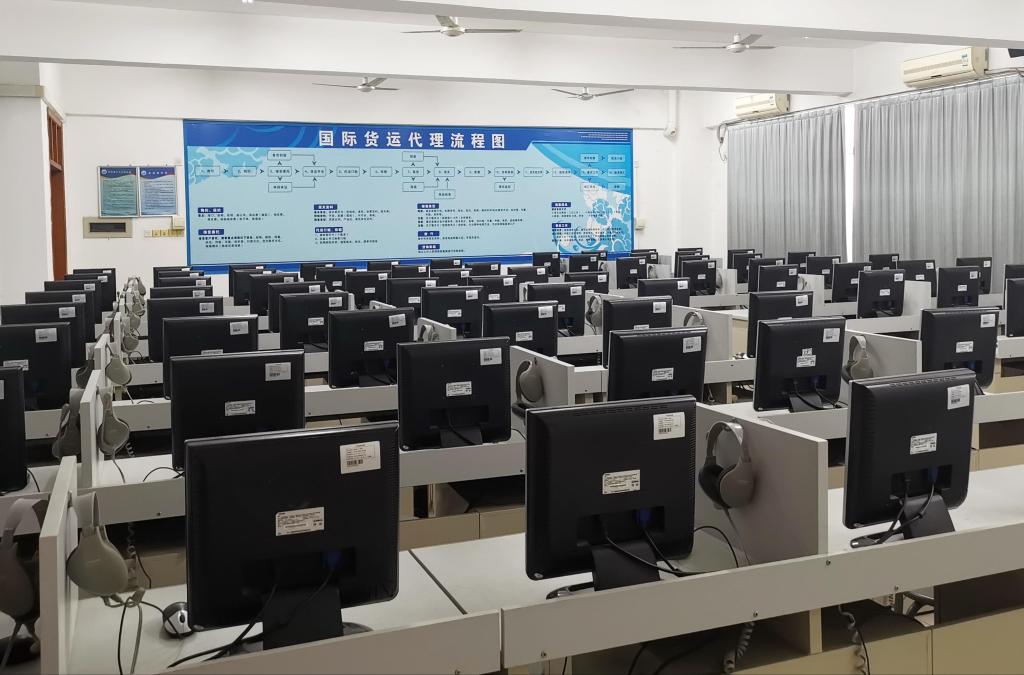
Figure 5 Laboratory’s Interior
6. ERP Laboratory
The ERP laboratory is equipped with 80 computers, UFIDA ERP software, UFIDA U8 freight forwarding management software, UFIDA U8 transportation management system, UFIDA SCM supply chain management sand table and electronic sand table. It is composed of freight SCM supply chain sand table and freight enterprise ERP experimental training room. It is equipped with the domestic advanced enterprise ERP management system and combined with the actual cases of freight enterprises to establish an operable and practical ERP experimental training place for freight enterprises.
The ERP Experimental Training Room provides ERP management training in the freight industry for logistics management, logistics engineering, transportation and related majors. At the same time, it also provides a platform for teachers and students to carry out innovative experiments and research such as the optimization and coordination of upstream and downstream enterprises in the supply chain and the optimization test of enterprise resource management.
7. Foreign Trade Transportation Business Simulation Laboratory
The foreign trade transportation business simulation laboratory is a comprehensive experimental training room for modern teaching activities using computer technology, network technology and multimedia technology. It has 80 computers, servers, display stands and other supporting equipment, and is equipped with a foreign trade transportation business simulation training integration platform and a set of simulation facilities and equipment.
The laboratory provides experimental training on customs declaration and freight forwarding, foreign trade transportation business, international trade simulation and documents, ship operation design, oral shipping English, etc. for logistics management, traffic management, transportation and related majors. At the same time, it also provides a platform for teachers and students to carry out relevant innovative experiments and research.
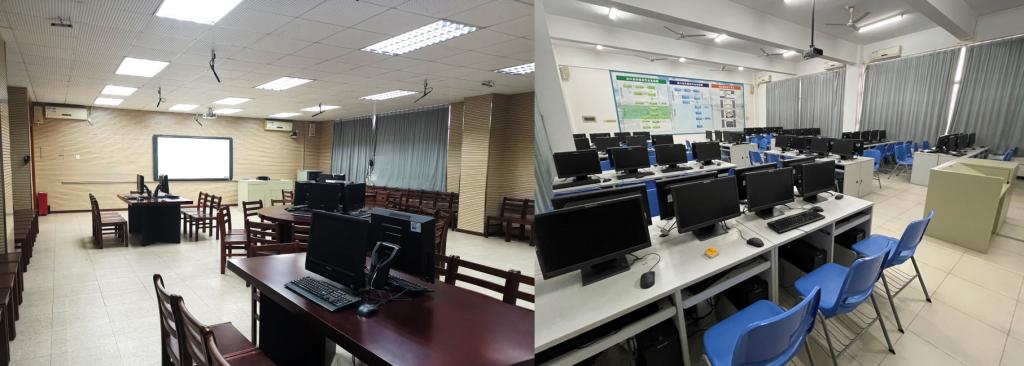
Figure 6 Laboratory’s Interior
8. Port and Shipping Industry Development Research Studio
The port and shipping industry development research studio is a special research institution jointly established by Guangzhou Institute of navigation and the port and shipping development research center of Guangzhou Port Authority in 2018.
It Provides intellectual support for the construction of Guangzhou international shipping center. At the same time, it carries out academic exchanges and cooperative education to cultivate high-quality applied talents for the development of port, shipping and transportation industry. It has initially formed four research directions: port planning and shipping development, engineering design and operation of shipping logistics system, green port and shipping, smart port and shipping, and coordinated development of port groups. It has undertaken and completed 15 topics, published 30 papers, and transformed a number of applied research results into CPPCC proposals or NPC proposals.
V. Academics & Scientific Research
Teachers of school, actively carry out teaching and scientific research, have achieved fruitful results. The school, based on the port and shipping industry development research studio, takes advantage of an opportunity to The Belt and Road initiative, a large bay area of Guangdong, a traffic and transportation power and sea power strategy, especially the development opportunity brought by Guangzhou international shipping center construction. In the meantime, it will around the port and shipping industry high quality development, green development and innovation development, intensive system with innovative research results, to provide intellectual support for the construction of Guangdong-Hong Kong-Macao Greater Bay Area and Guangzhou International Shipping Center. At the same time, academic exchanges and cooperative education are carried out to cultivate high-quality applied talents for the development of port, navigation and transportation industry. It has initially formed four research directions: port planning and shipping development, engineering design and operation of shipping logistics system, green port and shipping, smart port and shipping, and coordinated development of port cluster.
In recent years, the teachers of the college have undertaken 44 scientific research projects, including 13 vertical projects and 5 horizontal projects above the provincial and ministerial level; edited or participated in editing 9 textbooks and published 57 papers; teachers were awarded national 1 grade teaching achievement award, 1 provincial teaching achievement award, 2 college-level teaching achievement awards, 4 utility model patents; 15 representative government suggestions were adopted, among which, "About improving the support for the development of the shipping industry as soon as possible" The “Supported Recommendations” was adopted by the Central Committee of the Democratic League and submitted to the State Council, and was personally approved by the then Vice Premier Ma Kai, which had a good social impact.
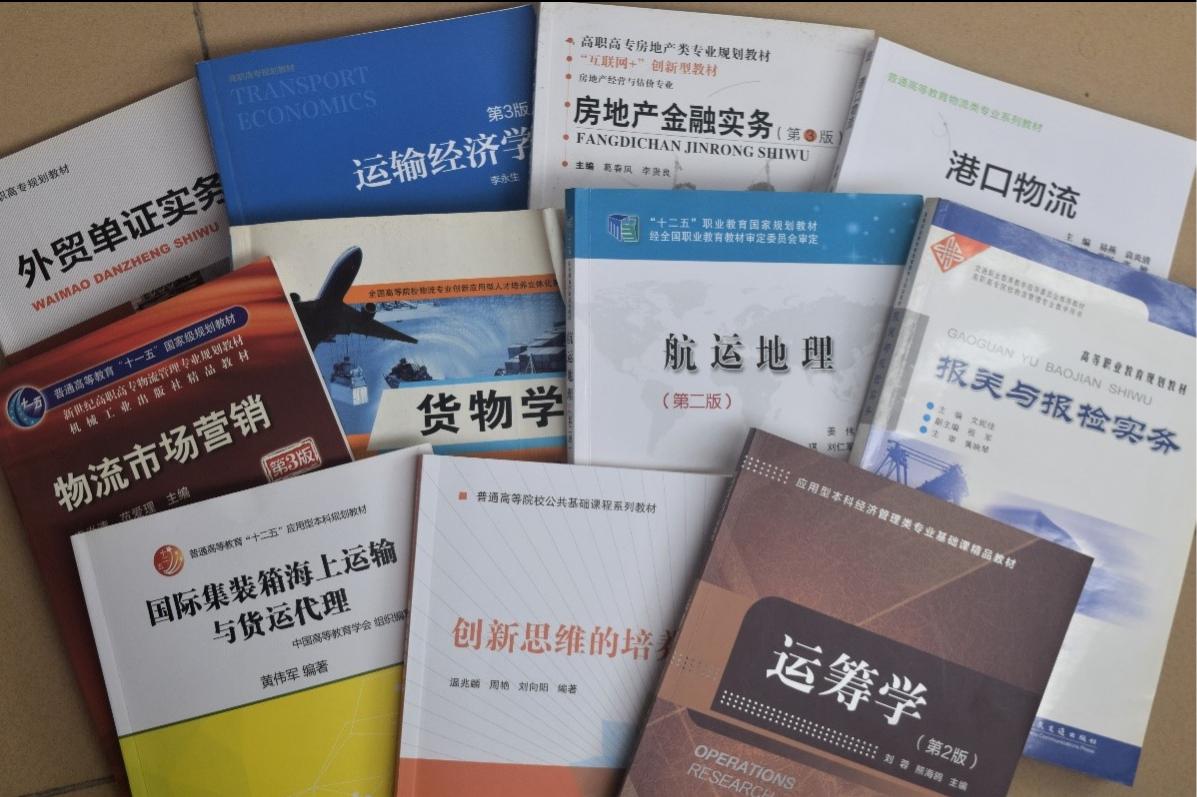
Figure 7 Part of the textbooks edited by the teachers
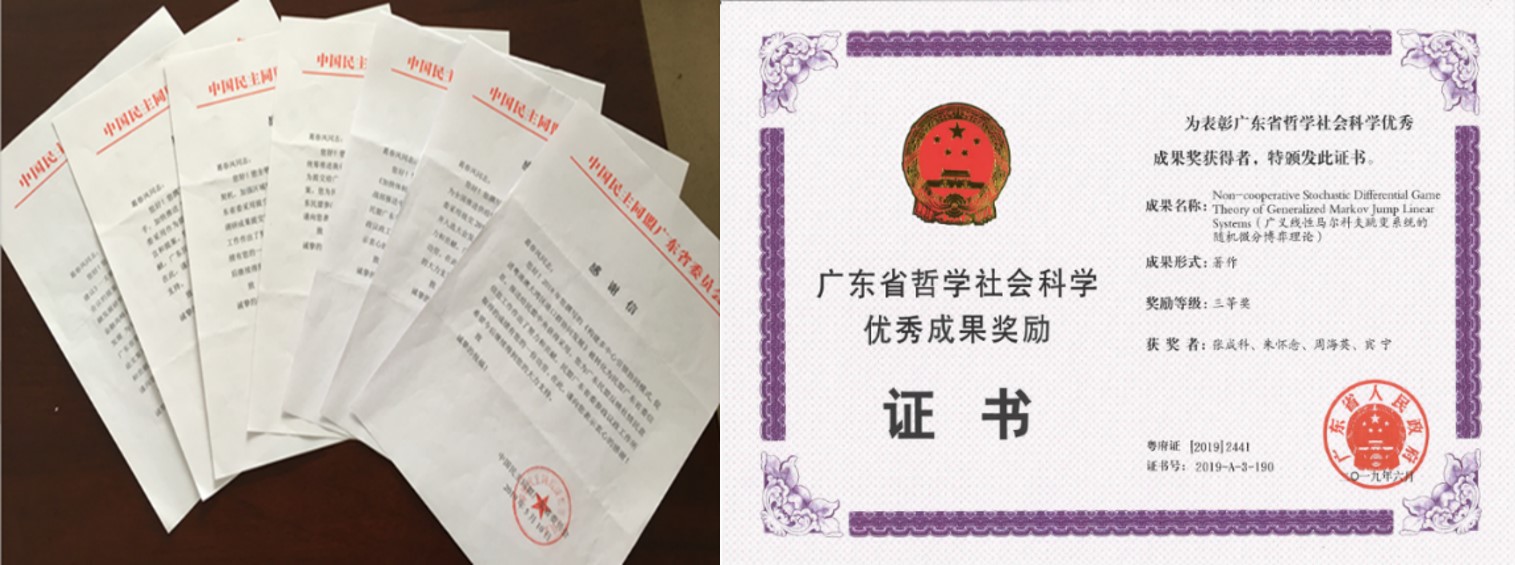
Figure 8 Representative government suggestions and an award certificate
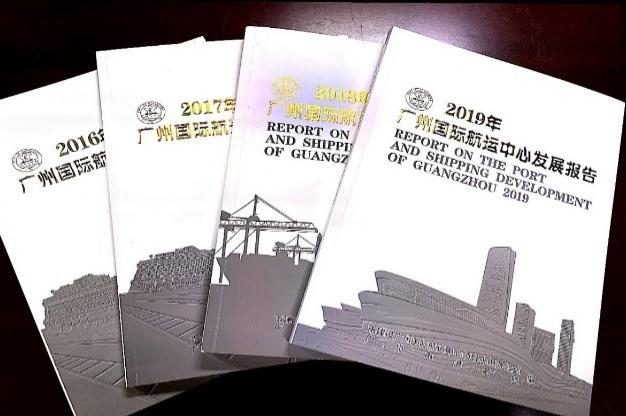
Figure 9 Development reports of Guangzhou International Shipping Center edited by the teachers
VI. International Cooperation
The school attaches great importance to international exchanges and cooperation, and actively carries out international exchanges and cooperation. The teachers and students have been to San Giorgio Navigation Institute, Genoa, Italy; Southampton solent university, UK; California state university, chico, USA; World Maritime University etc. and to exchange of learning in other foreign universities.
At present, it is actively preparing to hold undergraduate education program in logistics engineering between Guangzhou Maritime University and Fachhochschule Dresden, and is planning to carry out cooperative education programs with more foreign universities in the future.
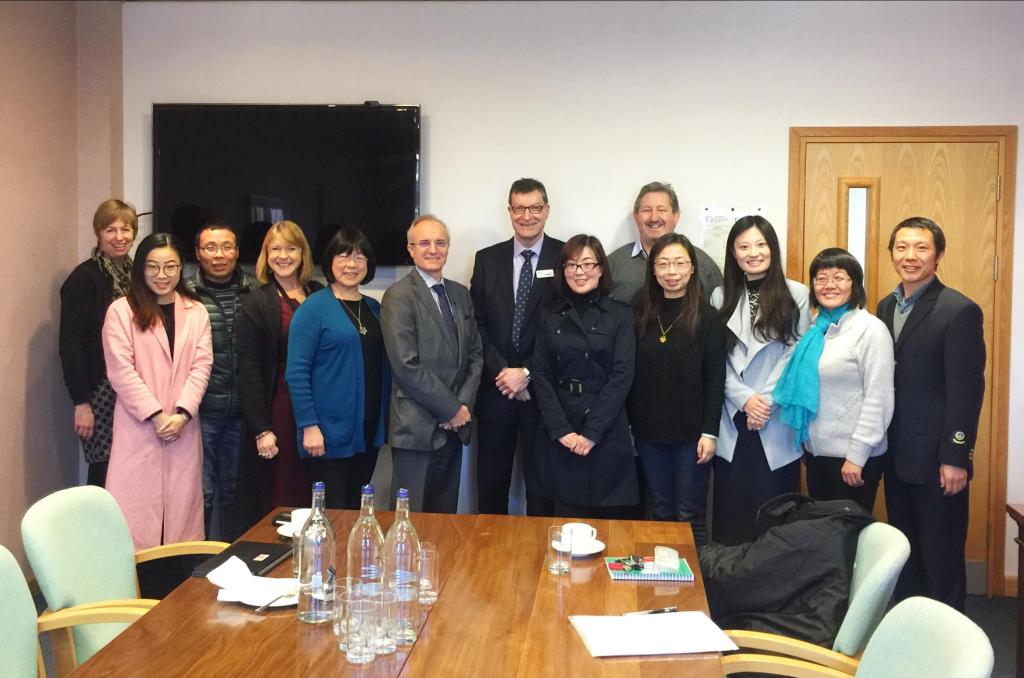
Figure 10 Doctor Jun CHENG, as a visiting scholar at Southampton Solent university in UK
Copyright:Guangzhou Maritime University All Rights Reserved粤ICP备15080873号 |